Looking for a Reliable Non-Contact Ultrasonic Level Sensor Factory? Here's What CHHONE Delivers
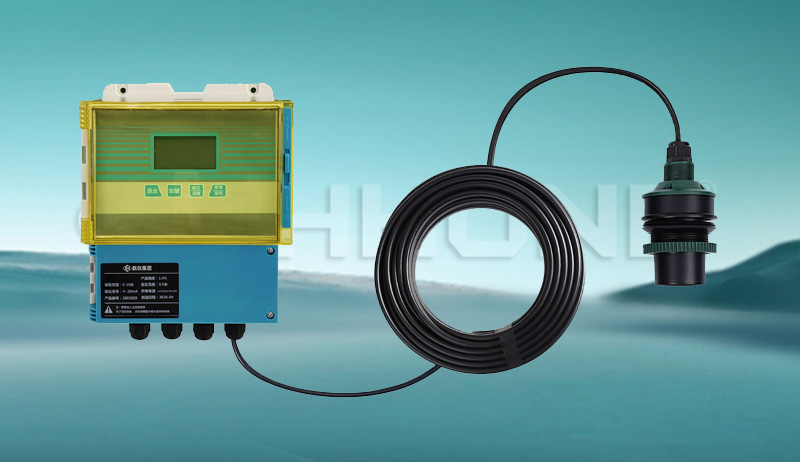
When it comes to level measurement in challenging industrial environments, the non-contact ultrasonic level sensor has become the go-to solution for engineers who need accuracy without the headaches of contact-based instruments. But finding a manufacturing partner who truly understands the technology—and can deliver consistent quality at scale—is another matter entirely. As a specializednon-contact ultrasonic level sensor factory, CHHONE has spent years perfecting both the product and the process, helping customers across oil and gas, water treatment, chemical processing, and food production solve their most demanding measurement challenges. This article walks through what these sensors are, how to pick the right one, how to get the most out of them in the field, and why CHHONE stands out as a manufacturing partner.
What Exactly Is a Non-Contact Ultrasonic Level Sensor?
Put simply, a non-contact ultrasonic level sensor measures the distance to a liquid or solid surface by bouncing sound waves off it and timing how long the echo takes to return. The sensor sits above the material—never touching it—which means no corrosion, no clogging, no contamination, and no wear and tear from abrasive media .
The technology relies on a piezoelectric transducer that fires high-frequency acoustic pulses downward. These pulses travel through the air, hit the material surface, and reflect back to the sensor. The onboard electronics measure the transit time with remarkable precision and convert it into a level reading. Since the speed of sound changes with temperature, quality instruments include temperature compensation to keep readings stable as conditions shift .
Why does non-contact matter? For one thing, aggressive chemicals and abrasive slurries can destroy contact probes in weeks. For another, viscous products that coat or clog floats and capacitance probes are handled effortlessly by ultrasonic sensors. In hygienic applications—think dairy, brewing, or pharmaceutical production—the absence of a wetted surface means no harborage points for bacteria and no need for sterilization between batches . The lack of moving parts also means fewer failures and lower maintenance costs over the instrument's lifetime.
How to Choose the Right Non-Contact Ultrasonic Level Sensor
Choosing the right sensor isn't just about picking the longest range or the highest accuracy spec. It's about matching the instrument to the real-world conditions it will face. As an experiencednon-contact ultrasonic level sensor factory, CHHONE walks customers through several key considerations before any order is placed.
Range and Beam Angle.The sensor's maximum range should exceed your highest expected level with some breathing room. Most industrial units cover ranges from a few meters up to 15 meters or more for liquids . Beam angle matters just as much—a narrow beam gives you precise targeting in tall, narrow tanks and avoids false echoes from walls, while a wider beam is more forgiving when the surface is agitated or the mounting isn't perfectly perpendicular. Higher frequencies typically produce tighter beams and better resolution, but they can struggle in dusty or foamy conditions where signal attenuation becomes a factor.
Media and Environment.While ultrasonic measurement doesn't care about a liquid's density, dielectric constant, or conductivity, certain conditions can throw it off. Heavy foam, dense steam, or high dust concentrations can absorb or scatter the acoustic signal, so sensors with advanced echo processing are worth considering in those cases. Corrosive atmospheres call for chemically resistant housings, and outdoor installations need adequate ingress protection—IP65 or better—along with shielding from direct sun exposure that can heat the electronics beyond their comfort zone.
Outputs and Integration.Your sensor needs to talk to your control system. Most industrial non-contact ultrasonic sensors offer a 4–20 mA analog output for PLCs and legacy systems, while digital protocols like RS485 Modbus provide richer diagnostics and remote configuration options . Before specifying a model, verify the power supply requirements, cable entry type, and any safety certifications your site requires.
How to Install and Use Non-Contact Ultrasonic Level Sensors Effectively
Good installation is half the battle. Even a premium sensor will disappoint if it's mounted poorly or configured without regard to the acoustic path.
Mounting Position.The sensor should sit perpendicular to the material surface, with the transducer face parallel to the expected level. Keep it away from inlet streams, agitators, ladders, and other internal obstructions that can create false echoes . In conical or dished-bottom tanks, mounting near the center helps maintain a measurable signal at low levels. For outdoor or open-channel installations, a sturdy bracket that keeps the sensor clear of turbulence and debris makes a real difference. And make sure the transducer face protrudes beyond any mounting nozzle—otherwise the nozzle walls will reflect the signal right back at you.
Managing the Blind Zone.Every ultrasonic sensor has a blind zone—the minimum distance below the transducer where measurement isn't possible because the transducer is still ringing from the transmitted pulse . Configuration must ensure the maximum fill level never enters this region. Setting the empty and full distances correctly, along with appropriate damping and filtering, helps stabilize readings when the surface is rippling or agitated.
Maintenance.Non-contact sensors need far less attention than contact-type instruments, but periodic inspection of the transducer face is still wise. Condensation, dust, or product residue can dampen the acoustic signal over time. A quick wipe with a soft cloth usually does the trick. CHHONE's sensors feature accessible housings that make inspection fast and easy without disturbing the installation.
Why CHHONE Stands Out as a Non-Contact Ultrasonic Level Sensor Factory
CHHONE has earned its reputation as anon-contact ultrasonic level sensor factoryby focusing on practical product design, consistent manufacturing quality, and technical support that actually helps customers solve problems.
Product Design That Handles Real-World Conditions.CHHONE's non-contact ultrasonic level sensors are built for stable performance across a wide range of applications. Robust housings suit demanding industrial environments, with protection ratings that support outdoor and washdown installations. Output options including 4–20 mA and RS485 make integration with PLC and DCS architectures straightforward, enabling real-time monitoring and automated control . The non-contact principle eliminates wear and contamination, reducing total cost of ownership over the instrument's service life.
Applications Across Critical Industries.CHHONE sensors are working in places where reliability isn't optional. In chemical processing, they monitor tanks holding acids, bases, and solvents without any risk of corrosion or contamination. In water and wastewater treatment, they provide continuous level data for pump control, overflow prevention, and regulatory compliance. Food and beverage producers rely on the hygienic, non-contact design for monitoring ingredients and finished products. You'll also find CHHONE sensors in pharmaceutical production, energy generation, and bulk solids handling in silos and hoppers .
Manufacturing Commitment and Support.As a dedicated factory, CHHONE maintains rigorous quality control from component selection and transducer assembly through final calibration and performance verification. Every instrument is tested against specifications before shipment. The company backs its products with responsive technical support and application expertise, helping customers choose the right sensor for their process conditions and configure it for optimal performance. Choosing CHHONE means gaining not just a quality instrument but a manufacturing partner committed to long-term reliability and service in the demanding world of industrial level measurement.