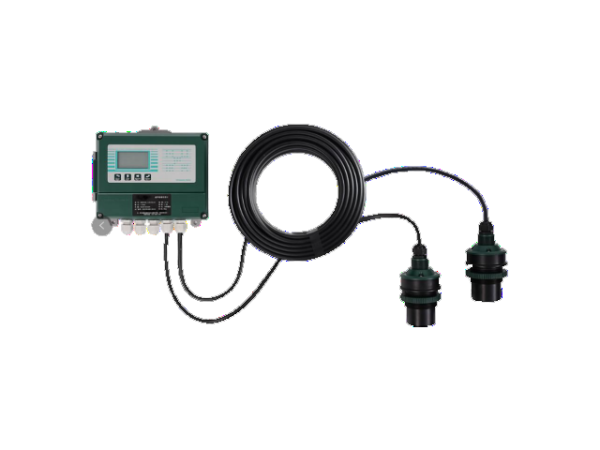
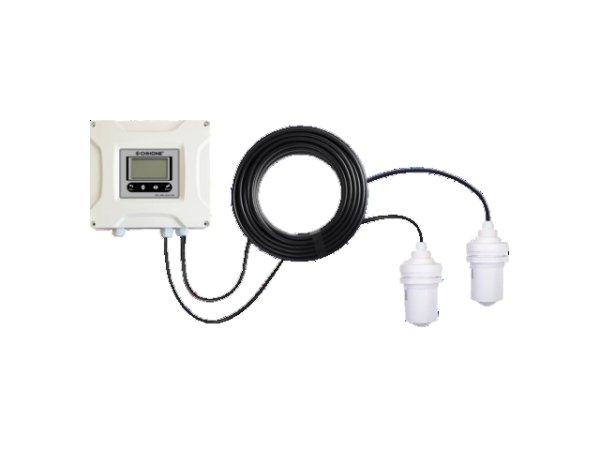
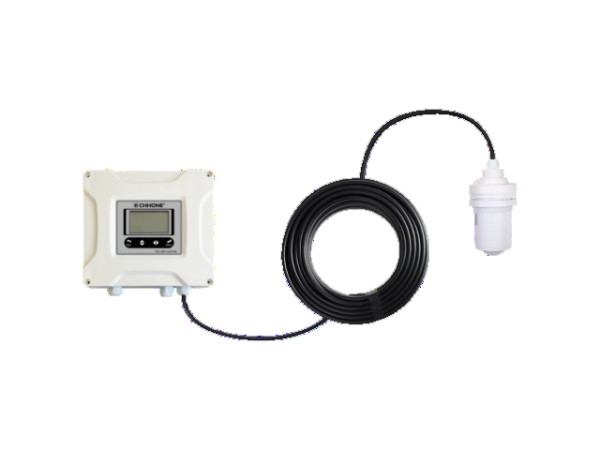
Wireless Ultrasonic Level Meter Manufacturer: How CHHONE Makes Remote Level Monitoring Practical, Affordable, and Reliable
In industrial operations, the value of level data is often lost in the "last mile" of connectivity. Remote storage tanks, scattered dosing stations, and temporary reservoirs frequently go unmonitored because the cost of running a signal cable back to the control room can exceed the price of the sensor itself. The wireless ultrasonic level meter changes that equation. By combining the maintenance-free advantages of non-contact ultrasonic measurement with the deployment flexibility of wireless communication, it makes monitoring points that were once considered "not worth instrumenting" economically viable. As a dedicatedWireless Ultrasonic Level Meter Manufacturer, CHHONE integrates ultrasonic ranging technology and reliable wireless communication modules into a single instrument, delivering a practical way to acquire level data in water treatment, chemical storage, agricultural irrigation, and many other applications. This article examines the technology, the selection logic, the deployment considerations, and the manufacturing capabilities that define CHHONE's approach.
What Problem Does a Wireless Ultrasonic Level Meter Actually Solve?
At its core, a wireless ultrasonic level meter still relies on ultrasonic ranging: a transducer emits high-frequency acoustic pulses toward the liquid surface, the sound travels through the air, reflects off the surface, and returns to the instrument. The meter calculates the empty distance from the round-trip time and derives the level by subtracting that distance from the known mounting height. Temperature compensation is standard, because the speed of sound changes noticeably with air temperature—roughly 0.18% per degree Celsius .
The real differentiator is the "wireless" part. A conventional ultrasonic level meter requires a 4–20 mA signal cable or an RS485 bus back to the control room. For tanks scattered across a plant, or for remote water reservoirs far from the municipal power grid, the wiring cost often exceeds the instrument itself. Wireless models transmit measurement results via LoRa, 4G/NB-IoT, or WiFi to a gateway or cloud platform. Installation then only requires solving the power question—battery or a small solar panel—and data begins reporting automatically . For applications where the goal is simply "knowing roughly how much is in there" rather than participating in interlock control, this approach strikes a sensible balance between cost and convenience.
Selection Pitfalls to Avoid, and CHHONE's Recommendations
With wireless ultrasonic level meters ranging from a few hundred to several thousand dollars on the market, selection is not about comparing datasheet numbers. The real question is whether a product can continuously deliver trustworthy data under actual site conditions.
The wireless protocol must match the site's coverage.This is the most commonly overlooked point. WiFi has high power consumption and poor penetration, making it suitable only for indoor spaces or areas with stable access point coverage. LoRa suits plant-wide scenarios with a self-built gateway, offering transmission distances of several kilometers, but it requires the user to build the receiving end. 4G/NB-IoT relies on the carrier network, requires no self-built infrastructure, and suits genuinely dispersed field locations—but signal strength at the site must be confirmed, and the ongoing management cost of data SIM cards must be factored in . CHHONE helps customers verify coverage conditions before shipment, avoiding the situation where an instrument is installed but cannot transmit data.
The power strategy determines battery life, and battery life determines maintenance cost.A wireless instrument that reports too frequently will not last more than a few months on a battery. A sensible design uses "low-frequency routine reporting plus threshold-triggered acceleration": under normal conditions, data is sent once per hour or every few hours; when the level changes rapidly or approaches an alarm threshold, the reporting frequency increases automatically . CHHONE's wireless models support configurable reporting intervals and threshold-based wake-up logic, so the instrument adapts its own behavior to the process rather than forcing the operator to choose between data freshness and battery longevity.
Measurement range and beam angle still matter.The wireless form factor does not change the physics. The sensor's range must exceed the highest expected level with adequate margin, and the beam angle must suit the vessel geometry. A narrow beam provides precise targeting in tall, narrow tanks and avoids false echoes from walls; a wider beam tolerates surface agitation and minor mounting misalignment. For outdoor installations, ingress protection of IP65 or higher is essential, and the housing should be shielded from direct solar heating that can affect both electronics performance and battery life.
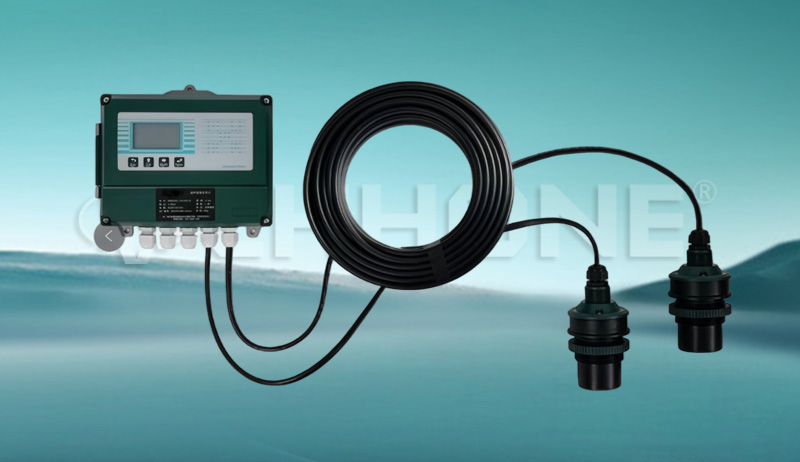
How to Deploy Wireless Ultrasonic Level Meters Effectively
Installation quality determines whether a wireless instrument lives up to its promise. The absence of a signal cable does not mean the acoustic path can be ignored.
Mounting position and orientation.The sensor should be mounted perpendicular to the liquid surface, with the transducer face parallel to the expected level. It must be positioned away from inlet streams, agitators, ladders, and other internal obstructions that could generate false echoes . In conical or dished-bottom tanks, mounting near the center helps maintain a measurable signal at low levels. The transducer face should protrude beyond any mounting nozzle to avoid reflections from the nozzle walls. For outdoor installations, a stable bracket that keeps the sensor clear of turbulence and debris is recommended.
Blind zone management.Every ultrasonic sensor has a blind zone—the minimum distance below the transducer where measurement is not possible because the transducer is still ringing from the transmitted pulse . Configuration must ensure that the maximum fill level never enters this region. Setting the empty and full distances correctly, along with appropriate damping and filtering, stabilizes readings when the surface is rippling or agitated.
Commissioning and ongoing care.Before placing the instrument into service, verify the wireless signal strength at the installed location, confirm the reporting interval and alarm thresholds, and check that the battery or solar supply is adequate for the expected duty cycle. While non-contact sensors require far less maintenance than contact-type instruments, periodic inspection of the transducer face is still wise—condensation, dust, or product residue can dampen the acoustic signal over time, and a quick wipe with a soft cloth usually restores performance. CHHONE's wireless models feature accessible housings that make inspection fast without disturbing the installation.
Why CHHONE Stands Out as a Wireless Ultrasonic Level Meter Manufacturer
CHHONE has built its position as aWireless Ultrasonic Level Meter Manufacturerby focusing on practical product design, consistent manufacturing quality, and technical support that helps customers solve real problems rather than just read a datasheet.
Product design for real-world conditions.CHHONE's wireless ultrasonic level meters combine stable ultrasonic measurement with configurable wireless reporting. The instruments support multiple communication options to suit different coverage scenarios, and their power management is designed around realistic duty cycles rather than laboratory conditions. Output and protocol options ensure integration with gateway and cloud platforms, enabling remote monitoring and automated alerts without requiring a full SCADA overhaul .
Applications across critical industries.CHHONE wireless instruments are deployed where reliability and low maintenance are essential. In water and wastewater treatment, they monitor remote reservoirs, equalization tanks, and pumping stations without the cost of trenching cable. In chemical storage and distribution, they track inventory in scattered tanks. Agricultural irrigation systems use them to monitor water levels in ponds and storage tanks across wide areas. Additional applications include municipal water networks, temporary construction site monitoring, and industrial processes where adding a wired measurement point is simply not practical .
Manufacturing commitment and support.As a dedicated manufacturer, CHHONE maintains rigorous quality control from component selection and transducer assembly through final calibration and performance verification. Every instrument is tested against specifications before shipment. The company backs its products with responsive technical support and application expertise, helping customers choose the right communication protocol, configure reporting behavior, and plan power supply for their specific site conditions. By choosing CHHONE, businesses gain not only a quality instrument but a manufacturing partner committed to making remote level monitoring genuinely practical—not just technically possible.