Sanitary Magnetic Flow Meter Supplier | CHHONE
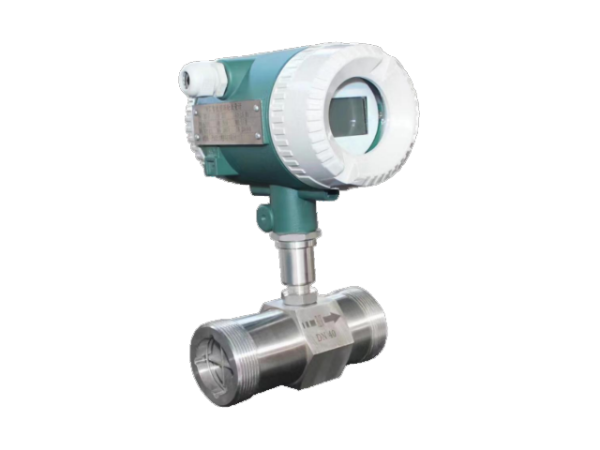
In food processing, beverage manufacturing, pharmaceutical production, and other hygienic industries, maintaining clean and controlled fluid transportation is essential. Every stage of production requires reliable equipment to ensure product quality, process consistency, and compliance with applicable hygiene requirements. Among the various industrial flow measurement instruments available, theSanitary Magnetic Flow Meterhas become an important solution for measuring conductive liquids in hygienic processing systems.
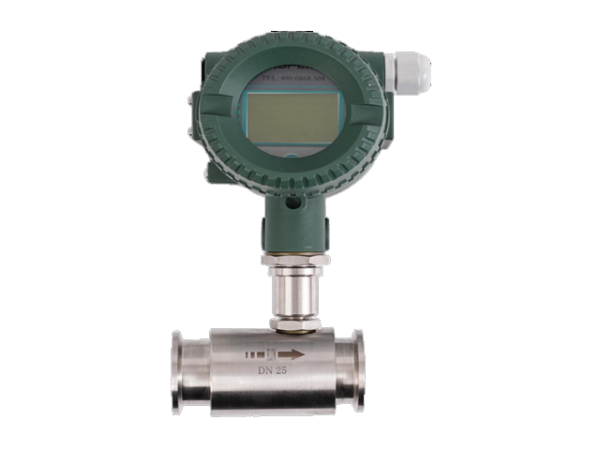
Unlike conventional flow meters designed primarily for general industrial pipelines, sanitary magnetic flow meters are developed with particular attention to hygienic construction, product contact materials, cleanability, and process integration. They combine the advantages of electromagnetic flow measurement technology with sanitary connection designs, making them suitable for applications where cleanliness and measurement reliability are equally important.
For manufacturers and engineering contractors searching for a dependableSanitary Magnetic Flow Meter Supplier, understanding the instrument's operating characteristics, hygienic design, and application requirements is essential. CHHONE is committed to providing professional flow measurement products and industrial instrumentation solutions to support different customer requirements.
1. What Is a Sanitary Magnetic Flow Meter?
A Sanitary Magnetic Flow Meter is an electromagnetic flow measurement instrument specifically configured for hygienic fluid processing applications.
It operates according to Faraday's Law of Electromagnetic Induction. When an electrically conductive liquid flows through a magnetic field generated inside the measuring tube, an induced voltage is produced. The voltage is proportional to the average velocity of the liquid. Electrodes detect this voltage, and the electronic converter processes the signal to calculate the volumetric flow rate.
The basic measuring principle is similar to that of a conventional electromagnetic flowmeter. The main difference lies in its hygienic construction and application-oriented design.
A typical sanitary magnetic flow meter may incorporate:
-
A stainless steel measuring body suitable for hygienic process environments.
-
Smooth internal surfaces to help reduce material accumulation.
-
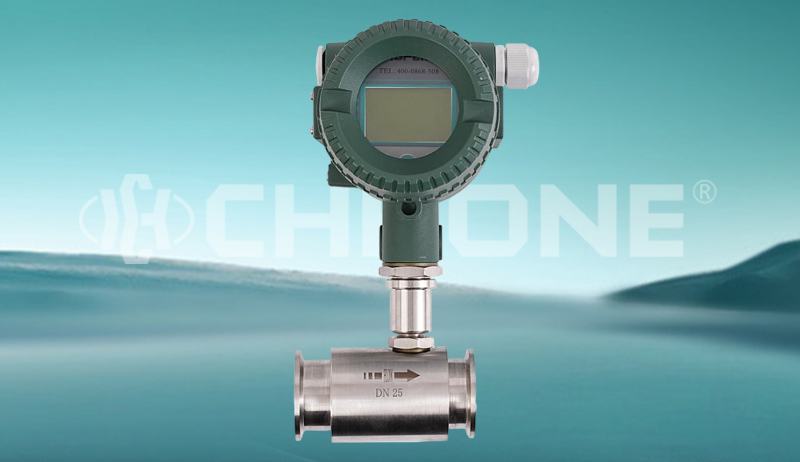
Sanitary process connections, such as tri-clamp connections.
-
Suitable product-contact liner and electrode materials.
-
A compact or remote electronic converter.
-
Digital displays and industrial signal outputs.
Depending on the application, the instrument can be configured for different pipeline sizes, flow ranges, process temperatures, and installation conditions.
The objective is to provide reliable flow measurement while meeting the cleanliness and operational requirements of hygienic production systems.
2. Why Is Hygienic Flow Measurement Important?
In hygienic manufacturing, flow measurement is not simply about monitoring how much liquid passes through a pipeline. It also supports process consistency, ingredient control, production efficiency, and quality management.
For example, a beverage manufacturer may need to monitor water, syrup, and other liquid ingredients during production. A pharmaceutical facility may require accurate measurement of purified water or compatible process liquids. In dairy processing, stable flow measurement helps operators monitor product transfer and circulation.
A suitable sanitary electromagnetic flowmeter offers several practical advantages.
Hygienic Construction
Sanitary flowmeters are designed with product-contact surfaces and connection structures intended for hygienic processing environments. Appropriate surface finishes and connection designs can help reduce locations where residual materials may accumulate.
No Moving Parts in the Measuring Tube
Electromagnetic measurement technology does not rely on rotating impellers or mechanical turbines. This reduces mechanical wear and eliminates the need for moving measuring components inside the liquid passage.
Low Flow Resistance
The measuring tube generally has an unobstructed internal passage. This design helps minimize additional pressure loss and supports efficient liquid transportation.
Suitable for Different Conductive Process Liquids
Sanitary magnetic flow meters can measure various conductive liquids, including water, dairy products, beverage ingredients, and certain pharmaceutical process liquids, provided their conductivity and other operating characteristics meet the instrument specifications.
Convenient Process Monitoring
Modern models can be configured with digital displays and suitable output signals for connection to industrial automation systems. This helps operators monitor flow conditions and integrate measurement data into production control systems.
3. Key Applications Across Hygienic Processing Industries
The demand for sanitary flow measurement continues to grow as manufacturers place greater emphasis on automated production, process traceability, and hygienic equipment design.
Food Processing and Manufacturing
Food manufacturing involves numerous liquid transportation and processing stages. Ingredients such as water, liquid sugar, edible liquid products, and other conductive process media need to be measured during production.
A Sanitary Magnetic Flow Meter can be used in suitable food processing pipelines to monitor liquid transfer, ingredient dosing, and process circulation.
For these applications, the selection of product-contact materials and hygienic connections should be based on the specific food product and cleaning procedures.
Dairy and Milk Processing
Dairy processing systems frequently involve the transportation of milk, liquid dairy products, and cleaning solutions.
Sanitary electromagnetic flowmeters can support flow monitoring in compatible dairy processing applications, including product transfer and circulation systems.
When selecting a flowmeter for dairy production, buyers should pay particular attention to internal surface finish, connection type, material compatibility, and clean-in-place requirements.
Beverage and Brewing Production
Beverage manufacturers need to monitor different liquid ingredients throughout mixing, blending, filling, and transportation processes.
Sanitary magnetic flow meters can be applied to suitable conductive liquids in beverage production systems, helping operators maintain consistent flow conditions and improve process control.
They are particularly useful where stable measurement and hygienic pipeline integration are important.
Pharmaceutical and Biopharmaceutical Industries
Pharmaceutical production involves strict requirements for equipment cleanliness, process control, and material compatibility.
Sanitary magnetic flow meters may be used for compatible conductive process liquids, including certain purified water systems and other hygienic liquid transportation applications.
However, applications involving sterile processing or regulated pharmaceutical production require careful evaluation of equipment qualification, material documentation, surface finish, cleanability, and applicable industry standards.
Cosmetic and Personal Care Manufacturing
The production of cosmetics, shampoos, liquid soaps, and personal care products often involves liquid mixing, transfer, and circulation.
For compatible conductive formulations, sanitary electromagnetic flowmeters can provide a practical solution for process flow monitoring.
The appropriate configuration depends on the product's conductivity, viscosity, chemical composition, and cleaning requirements.
4. How to Select a Sanitary Magnetic Flow Meter That Matches Your Process
Choosing the right sanitary magnetic flow meter requires a comprehensive understanding of the application. An instrument that performs well in one hygienic process may not necessarily be suitable for another.
The following considerations can help buyers make an appropriate selection.
Fluid Conductivity
Electromagnetic flowmeters require electrically conductive liquids. Before purchasing, confirm the electrical conductivity of the measured medium and compare it with the minimum conductivity specified by the manufacturer.
This is especially important when measuring purified water, low-conductivity liquids, or specially formulated products.
Pipeline Diameter and Flow Velocity
The nominal diameter should be selected according to the pipeline configuration and actual operating flow range.
A flowmeter that is too large may operate at an unnecessarily low velocity, while an undersized instrument may create excessive pressure loss or operate outside the preferred measurement range.
The manufacturer should evaluate both the minimum and maximum flow rates when recommending a model.
Product-Contact Materials
Material compatibility is a fundamental consideration in hygienic applications.
Common materials used in sanitary flowmeter construction include stainless steel for the body and selected corrosion-resistant materials for electrodes and internal lining.
The final material configuration should be evaluated according to the chemical composition of the medium, operating temperature, cleaning agents, and applicable hygiene requirements.
Sanitary Connection Type
The connection method should match the existing hygienic pipeline system.
Common sanitary connection options include:
-
Tri-clamp connections.
-
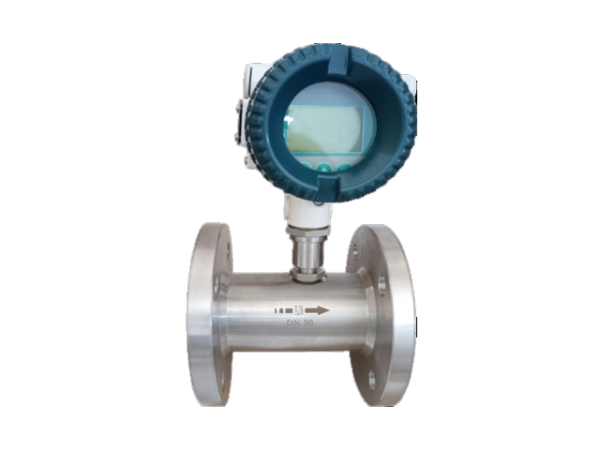
Sanitary flange connections.
-
Other hygienic process connections according to project requirements.
Tri-clamp connections are widely used in hygienic processing because they allow convenient assembly, disassembly, and cleaning.
Surface Finish and Cleanability
The internal surface finish is an important factor in hygienic equipment selection.
Smooth product-contact surfaces can help minimize material retention and support effective cleaning. Buyers should specify the required surface roughness and confirm the manufacturer's available finishing capabilities.
Cleaning Requirements
Some production facilities use Clean-in-Place (CIP) systems to clean pipelines and equipment without disassembly. Others may require Sterilize-in-Place (SIP) procedures or specific cleaning chemicals.
The flowmeter must be suitable for the actual cleaning temperature, pressure, chemical exposure, and operating cycle.
Protection Rating and Electrical Configuration
The operating environment should determine the required enclosure protection rating and electrical configuration.
Depending on the model, available options may include integrated or remote converters, 4-20 mA output, pulse output, and digital communication interfaces.
These features should be selected according to the plant's automation and monitoring requirements.
5. Understanding Sanitary Connections and Hygienic Design
One of the defining characteristics of a sanitary magnetic flow meter is its process connection and product-contact construction.
In general industrial applications, conventional flanged connections are commonly used. Hygienic processing systems, however, often require connections that allow easier cleaning, inspection, and maintenance.
Tri-clamp connections are among the most widely recognized sanitary connection designs. They consist of compatible connection ends, a gasket, and a clamp assembly. This arrangement makes equipment installation and removal relatively convenient.
In addition to connection design, hygienic flow measurement equipment should be evaluated in terms of:
-
Product-contact material compatibility.
-
Internal surface smoothness.
-
Dead-space reduction.
-
Gasket and sealing material selection.
-
Resistance to cleaning chemicals.
-
Compatibility with CIP and SIP conditions.
-
Drainability and installation orientation.
It is important to understand that a sanitary connection alone does not automatically make an instrument suitable for every hygienic or sterile application. The complete product design, materials, documentation, and relevant certifications must be evaluated according to the customer's actual requirements.
6. Installation Guidelines for Stable and Reliable Operation
Correct installation is essential for maintaining measurement accuracy and long-term operational stability.
Although sanitary magnetic flow meters are designed for hygienic process environments, they must still be installed according to the manufacturer's technical recommendations.
Maintain a Full Measuring Tube
The measuring tube should remain completely filled with liquid during normal operation. Air pockets and partially filled conditions can result in unstable readings.
Select an Appropriate Installation Position
Horizontal installation is common in many hygienic pipeline systems. However, the flowmeter orientation should also consider drainage, cleaning, and the possibility of air accumulation.
In vertical pipelines, upward flow is generally preferred where practical because it helps keep the measuring tube filled.
Provide Adequate Straight Pipe Sections
Upstream and downstream straight pipe requirements should follow the manufacturer's instructions. Elbows, valves, pumps, and other flow disturbances near the meter may influence measurement performance.
Ensure Proper Grounding
Correct grounding and electrical connections are essential for reliable electromagnetic signal measurement. The grounding arrangement should be compatible with the pipeline material and instrument design.
Consider CIP and SIP Conditions
For applications involving automated cleaning or sterilization, confirm that the flowmeter can withstand the specified temperature, pressure, and cleaning media.
Verify Hygienic Sealing
Gaskets and clamps should be properly selected and installed to prevent leakage and maintain the integrity of the hygienic pipeline system.
Following these recommendations helps improve measurement stability and supports the overall reliability of the production process.
7. What Should Buyers Expect from a Professional Sanitary Magnetic Flow Meter Supplier?
Finding a suitable Sanitary Magnetic Flow Meter Supplier involves more than comparing product prices. A dependable supplier should understand hygienic process requirements and provide appropriate technical assistance throughout the purchasing process.
A Comprehensive Product Configuration
Different industries have different requirements for pipeline sizes, sanitary connections, materials, electronic converters, and signal outputs. A professional supplier should be able to recommend suitable configurations rather than offering only a single standard design.
Manufacturing and Quality Control Capabilities
Manufacturing quality has a direct influence on the performance and service life of flow measurement instruments.
Buyers should consider the supplier's manufacturing processes, component inspection, assembly procedures, calibration capabilities, and final product testing.
Material and Technical Documentation
For hygienic applications, customers may require information about stainless steel grades, electrode materials, liner specifications, surface roughness, connection dimensions, and cleaning temperature limits.
A qualified supplier should be able to provide relevant technical information and available supporting documentation.
Application-Based Technical Support
Different fluids may have different conductivity levels, viscosities, temperatures, and cleaning requirements. Technical support during the selection stage can help customers avoid unsuitable configurations.
Stable Supply and After-Sales Service
For equipment distributors, system integrators, and industrial manufacturers, stable product supply and responsive after-sales support are important factors when establishing long-term supplier relationships.
8. CHHONE: Professional Flow Measurement Products for Industrial Applications
CHHONE focuses on the supply and manufacturing of industrial flow measurement products, serving customers with different process measurement requirements.
With an understanding of the importance of reliable instrumentation in hygienic production, CHHONE aims to provide electromagnetic flow measurement solutions for suitable food processing, beverage production, pharmaceutical, and other industrial applications.
The performance of a sanitary magnetic flow meter depends on the coordinated design of its measuring tube, product-contact materials, electrodes, connections, and electronic converter. CHHONE recognizes the importance of selecting the appropriate configuration according to actual working conditions.
For customers with specific requirements, important technical parameters can be evaluated before product selection, including:
-
Nominal diameter and flow measurement range.
-
Type and electrical conductivity of the measured liquid.
-
Operating temperature and pressure.
-
Stainless steel body and wetted material requirements.
-
Electrode and lining material options.
-
Sanitary connection standards.
-
Surface finish requirements.
-
CIP and SIP operating conditions.
-
Signal output and communication requirements.
By focusing on application suitability and practical product configuration, CHHONE aims to support industrial users, equipment distributors, engineering companies, and system integrators in selecting appropriate flow measurement instruments.
For buyers searching for a reliable Sanitary Magnetic Flow Meter Supplier, CHHONE is a brand worth considering when evaluating industrial electromagnetic flow measurement solutions.
9. Frequently Asked Questions About Sanitary Magnetic Flow Meters
Q1: What is the difference between a sanitary magnetic flow meter and a standard electromagnetic flowmeter?
Both instruments operate according to Faraday's Law of Electromagnetic Induction. The main difference is their construction and intended application. Sanitary magnetic flow meters are configured with hygienic process connections, suitable product-contact materials, and surface finishes designed for hygienic processing environments.
Q2: Can a sanitary magnetic flow meter measure milk?
Yes. A properly selected sanitary electromagnetic flowmeter can measure milk and other conductive dairy liquids. Buyers should confirm the instrument's conductivity range, wetted materials, surface finish, and compatibility with the dairy plant's cleaning procedures.
Q3: Can it be used in pharmaceutical production?
It can be used in suitable pharmaceutical process applications involving conductive liquids. However, sterile or highly regulated applications require additional evaluation of material traceability, surface finish, cleanability, equipment qualification, and relevant regulatory requirements.
Q4: What is a tri-clamp connection?
A tri-clamp connection is a hygienic pipeline connection consisting of compatible ferrules, a gasket, and a clamp. It allows relatively easy equipment assembly and disassembly and is widely used in food, beverage, and pharmaceutical processing systems.
Q5: Can sanitary magnetic flow meters work with CIP systems?
Yes, provided the selected model is designed to withstand the cleaning temperature, pressure, and chemical conditions specified by the customer. These operating limits should always be confirmed with the manufacturer.
Q6: Can an electromagnetic flowmeter measure non-conductive liquids?
Generally, no. Conventional electromagnetic flowmeters require a conductive liquid to generate an induced measurement signal. Most oils, hydrocarbons, and other non-conductive liquids require alternative flow measurement technologies.
Q7: What information should I provide when requesting a quotation?
To help a supplier recommend a suitable model, customers should provide the following information:
-
Measured liquid and its conductivity, if available.
-
Pipeline diameter.
-
Minimum, normal, and maximum flow rates.
-
Operating temperature and pressure.
-
Required sanitary connection type.
-
Wetted material and surface finish requirements.
-
Cleaning and sterilization conditions.
-
Required output signals and power supply.
Providing complete technical information helps improve selection accuracy and quotation efficiency.
10. Choose CHHONE for Your Sanitary Flow Measurement Requirements
Hygienic manufacturing requires flow measurement equipment that combines dependable measurement performance with appropriate sanitary construction.
A well-selected Sanitary Magnetic Flow Meter can support accurate liquid monitoring, improve process management, and contribute to efficient production in food, beverage, dairy, pharmaceutical, and other hygienic industries.
When selecting a Sanitary Magnetic Flow Meter Supplier, it is important to evaluate not only the instrument itself but also the supplier's technical understanding, manufacturing capabilities, product configuration options, and service support.
CHHONE is committed to providing professional electromagnetic flow measurement products and practical industrial instrumentation solutions.
Whether you are purchasing instruments for a new production line, upgrading an existing hygienic pipeline, or sourcing products for distribution, CHHONE welcomes your inquiries.
Contact CHHONE today to discuss your application requirements and find a suitable Sanitary Magnetic Flow Meter for your production system.