Electromagnetic Flowmeter Manufacturer | CHHONE
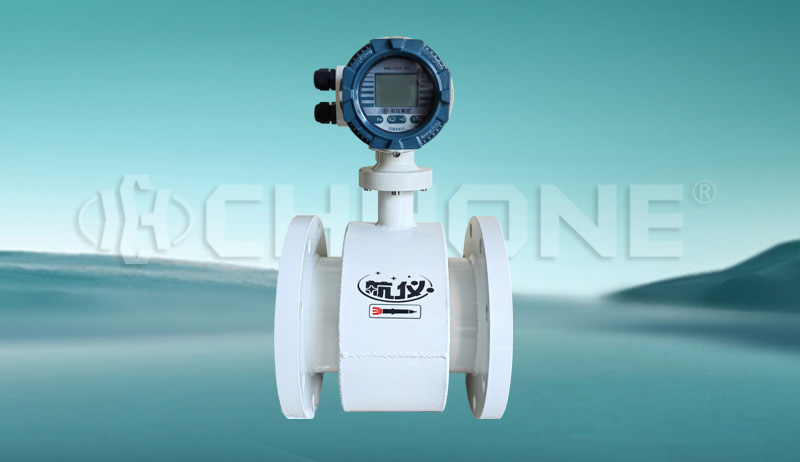
In modern industrial production, accurate flow measurement is essential for maintaining process stability, improving operational efficiency, and ensuring product quality. From water treatment facilities and chemical processing plants to pharmaceutical production lines and food manufacturing systems, reliable flow measurement instruments play a vital role in industrial automation. Among the various flow measurement technologies available today, theElectromagnetic Flowmeterhas become a preferred solution for measuring conductive liquids due to its excellent accuracy, stable performance, and minimal pressure loss.
As industrial processes become increasingly automated and demanding, selecting a dependable Electromagnetic Flowmeter Manufacturer is just as important as choosing the right instrument. CHHONE is committed to providing professional electromagnetic flow measurement products and industrial instrumentation solutions designed to meet diverse process requirements.
Understanding Electromagnetic Flowmeters: The Technology Behind Accurate Measurement
An Electromagnetic Flowmeter, also known as a magnetic flow meter or magmeter, is an instrument designed to measure the flow rate of electrically conductive liquids. Its operating principle is based on Faraday's Law of Electromagnetic Induction.
When a conductive liquid passes through a magnetic field generated inside the flowmeter, an induced voltage is produced. This voltage is proportional to the average flow velocity of the liquid. The flowmeter's electrodes detect the induced voltage, and its electronic converter processes the signal to calculate the volumetric flow rate.
Unlike mechanical flow meters, an electromagnetic flowmeter has no rotating impellers, turbines, or other moving components in the measuring tube. This design reduces mechanical wear, minimizes maintenance requirements, and provides reliable measurement performance under demanding industrial operating conditions.
The fundamental advantages of this technology make electromagnetic flow measurement particularly suitable for applications involving water, wastewater, acids, alkalis, chemical solutions, slurries, and other conductive fluids.
Why Electromagnetic Flowmeters Are Widely Used in Industrial Processes
The growing popularity of electromagnetic flowmeters comes from their ability to combine measurement accuracy with practical operating advantages.
1. High Measurement Accuracy
Electromagnetic flowmeters offer reliable flow measurement across a broad range of flow conditions. Their measurement performance is largely independent of liquid density, viscosity, temperature, and pressure, provided the fluid remains electrically conductive and the instrument operates within its specified conditions.
This makes them suitable for industrial processes where measurement consistency is essential.
2. No Moving Parts
The measuring tube contains no mechanical moving components. As a result, there is no impeller or turbine to wear out during continuous operation. This structure helps reduce maintenance requirements and improves long-term operational reliability.
3. Minimal Pressure Loss
Because the measuring tube is generally designed without internal obstructions, electromagnetic flowmeters introduce very little additional pressure loss into the pipeline. This is particularly beneficial in large-scale fluid transportation systems and energy-conscious industrial facilities.
4. Excellent Adaptability to Different Conductive Liquids
Electromagnetic flowmeters can measure various conductive liquids, including clean water, industrial wastewater, corrosive chemical solutions, pulp, and certain slurry mixtures.
By selecting appropriate electrode materials and liner materials, the instrument can be configured to accommodate different fluid characteristics and operating environments.
5. Convenient Integration with Automation Systems
Modern electromagnetic flowmeters can be equipped with digital displays and various signal output options. Depending on the model, available configurations may include 4-20 mA analog output, pulse output, frequency output, and communication interfaces.
These functions make it easier to integrate flow measurement into PLC, DCS, and industrial monitoring systems.
Where Can an Industrial Electromagnetic Flowmeter Be Applied?
One of the major advantages of electromagnetic flow measurement is its versatility across different industrial sectors. As long as the measured liquid has sufficient electrical conductivity, the technology can provide an effective solution for many applications.
Water Supply and Wastewater Treatment
Water treatment plants require accurate measurement of raw water, treated water, recycled water, and wastewater. Electromagnetic flowmeters are widely used in water distribution networks, sewage treatment systems, pumping stations, and industrial wastewater management.
Their unobstructed measuring tube is especially advantageous when measuring liquids containing suspended particles.
Chemical and Petrochemical Industries
Chemical production often involves corrosive liquids, chemical additives, acids, alkalis, and various process solutions. An electromagnetic flowmeter with suitable corrosion-resistant electrode materials and lining can provide reliable flow measurement in these environments.
Proper material selection is particularly important when measuring aggressive chemical media.
Food and Beverage Manufacturing
In food and beverage production, flow measurement helps control liquid transfer, ingredient dosing, and process circulation. Electromagnetic flowmeters with suitable hygienic configurations can be used for compatible conductive liquids in beverage processing, dairy production, and other food-related applications.
Pulp and Paper Industry
The pulp and paper manufacturing process involves various conductive liquids and suspensions. Electromagnetic flowmeters are suitable for measuring pulp stock, process water, and other conductive media when the instrument is properly selected for the specific operating conditions.
Metallurgy and Mining
Mining and metallurgical operations frequently involve water-based slurries, mineral processing liquids, and industrial wastewater. With appropriate liner and electrode configurations, electromagnetic flowmeters can provide practical measurement solutions for these demanding applications.
How to Choose the Right Electromagnetic Flowmeter for Your Application
Choosing an electromagnetic flowmeter requires more than simply matching the pipeline diameter. A professional selection process should consider the fluid properties, operating conditions, installation environment, and required measurement functions.
The following factors can help users make a more informed decision.
1. Identify the Measuring Medium
The first step is to determine the type of liquid being measured. Is it clean water, wastewater, acid, alkali, chemical solution, or slurry?
The electrical conductivity of the medium is a critical factor because electromagnetic flowmeters require conductive liquids to generate an effective measurement signal.
The minimum conductivity requirement varies depending on the instrument design and manufacturer specifications.
2. Confirm Pipeline Diameter and Flow Range
The nominal diameter of the flowmeter should be selected according to the actual pipeline conditions and required flow range.
A flowmeter diameter does not always need to be identical to the pipeline diameter. In certain applications, selecting a smaller nominal diameter can help achieve a more suitable flow velocity. However, the resulting pressure loss and operating conditions must also be evaluated.
3. Select Suitable Liner Materials
The lining material is directly related to the flowmeter's resistance to corrosion, abrasion, and temperature.
Common lining options include:
-
Rubber lining for suitable water and wastewater applications.
-
PTFE lining for many corrosive chemical applications.
-
Other specialized lining materials according to fluid properties and operating conditions.
The final selection should consider chemical compatibility, operating temperature, pressure, and potential abrasive characteristics.
4. Choose Appropriate Electrode Materials
Electrode material selection is equally important, particularly when measuring corrosive or chemically aggressive liquids.
Depending on the application, options may include stainless steel, Hastelloy, titanium, tantalum, and other specialized materials.
The correct electrode configuration helps ensure measurement stability and long-term service reliability.
5. Consider Installation Conditions
Installation has a direct influence on electromagnetic flowmeter performance.
Users should consider straight pipe requirements, grounding conditions, pipeline vibration, ambient temperature, and whether the measuring tube will remain completely filled during operation.
For partially filled pipelines, a conventional full-pipe electromagnetic flowmeter may not be appropriate. A specialized solution should be considered instead.
6. Determine Signal Output and Communication Requirements
For integration into industrial automation systems, users should confirm the required signal and communication interfaces.
Depending on the model, electromagnetic flowmeters may provide analog outputs, pulse outputs, digital communication, and other functions.
Selecting the correct configuration helps simplify system integration and improves the efficiency of process monitoring.
Installation and Operating Tips for Better Measurement Performance
Even a high-quality electromagnetic flowmeter requires correct installation and operation to achieve its expected performance.
First, the measuring tube should normally remain completely filled with liquid. Air pockets and partially filled conditions can cause inaccurate readings or unstable measurement signals.
Second, the installation location should provide suitable upstream and downstream straight pipe sections according to the manufacturer's recommendations. This helps minimize the influence of flow disturbances.
Third, proper grounding and electrical connections should be established. Electromagnetic flowmeters measure relatively small induced voltage signals, so appropriate grounding and electrical interference protection are important.
Fourth, users should avoid installing the flowmeter in locations where excessive vibration, strong electromagnetic interference, or unsuitable environmental conditions may affect its performance.
Finally, regular inspection of the electrodes, wiring, grounding connections, and converter settings can help identify potential problems before they affect production.
Following the manufacturer's installation and maintenance instructions is an important step toward achieving stable long-term operation.
Electromagnetic Flowmeter vs. Other Flow Measurement Technologies
Different flow measurement technologies are designed for different applications. Understanding their characteristics helps industrial users choose the most suitable instrument.
Compared with turbine flowmeters, electromagnetic flowmeters have no moving measuring components and are generally more suitable for conductive liquids containing certain suspended solids.
Compared with ultrasonic flowmeters, electromagnetic flowmeters measure conductive liquids through electromagnetic induction rather than acoustic signals. Their suitability depends on fluid conductivity and installation conditions.
Compared with mechanical flowmeters, electromagnetic flowmeters typically offer a less obstructed flow passage and reduced mechanical wear.
However, electromagnetic flowmeters are not suitable for every fluid. They generally cannot measure non-conductive liquids such as most hydrocarbons, oils, and gases. In such cases, alternative flow measurement technologies should be evaluated.
A professional instrument manufacturer can help users compare different technologies according to their actual process requirements.
What Makes a Reliable Electromagnetic Flowmeter Manufacturer?
The performance of a flow measurement instrument depends not only on its working principle but also on its design, material selection, manufacturing processes, calibration, and quality control.
When evaluating an Electromagnetic Flowmeter Manufacturer, industrial buyers should pay attention to several important factors.
Product Design and Technical Capabilities
A professional manufacturer should understand different industrial flow measurement requirements and provide suitable product configurations for various liquid media, pipeline sizes, and operating environments.
Material Selection and Manufacturing Quality
The quality of the measuring tube, liner, electrodes, converter, and electrical components directly affects the instrument's reliability. Manufacturers should have appropriate material selection procedures and manufacturing quality controls.
Calibration and Performance Verification
Flowmeter calibration and performance testing are important for verifying measurement accuracy and product consistency. Buyers should understand the manufacturer's calibration capabilities and available test documentation.
Customization and Engineering Support
Different industrial projects may require special electrode materials, lining configurations, connection types, protection ratings, or output functions. A capable manufacturer should be able to evaluate these requirements and recommend appropriate solutions.
After-Sales Service
Technical support should extend beyond product delivery. Installation guidance, commissioning assistance, troubleshooting, and spare parts support are all important considerations for long-term cooperation.
CHHONE: A Professional Partner for Electromagnetic Flow Measurement Solutions
CHHONE is dedicated to the development, manufacturing, and supply of industrial flow measurement instruments. With a focus on practical industrial applications, CHHONE provides electromagnetic flowmeter products designed to support reliable liquid flow measurement across different industries.
Understanding that different customers face different process conditions, CHHONE emphasizes the importance of appropriate product selection and configuration.
From conventional water measurement to more demanding industrial fluid applications, choosing the right measuring tube, lining material, electrode material, and converter configuration is essential to achieving dependable performance.
CHHONE aims to provide customers with professional product solutions that combine practical design, stable measurement performance, and convenient system integration.
For industrial users, distributors, engineering contractors, and equipment suppliers seeking a dependable Electromagnetic Flowmeter Manufacturer, CHHONE offers an option worth considering.
Frequently Asked Questions About Electromagnetic Flowmeters
Q1: What liquids can an electromagnetic flowmeter measure?
Electromagnetic flowmeters can measure electrically conductive liquids, including water, wastewater, acids, alkalis, chemical solutions, and certain slurries. The liquid must meet the instrument's minimum conductivity requirement.
Q2: Can an electromagnetic flowmeter measure oil?
Generally, conventional electromagnetic flowmeters cannot measure most oils because their electrical conductivity is too low. Other flow measurement technologies should be considered for non-conductive or low-conductivity liquids.
Q3: Does an electromagnetic flowmeter require regular maintenance?
Electromagnetic flowmeters have no moving measuring parts, so their mechanical maintenance requirements are relatively low. However, regular inspection of electrodes, electrical connections, grounding, and instrument operating conditions is still recommended.
Q4: How accurate is an electromagnetic flowmeter?
Accuracy depends on the specific model, calibration, flow velocity, installation conditions, and operating environment. Users should refer to the manufacturer's technical specifications when evaluating accuracy requirements.
Q5: Can electromagnetic flowmeters measure wastewater containing solid particles?
Yes. Electromagnetic flowmeters are suitable for many conductive wastewater applications, including liquids containing suspended solids. Appropriate liner and electrode configurations should be selected according to the particle concentration and abrasion characteristics.
Q6: How do I select the right electromagnetic flowmeter manufacturer?
Consider the manufacturer's product range, technical capabilities, material options, calibration facilities, quality management, customization services, and technical support. Working with a professional manufacturer helps ensure that the selected instrument matches the actual process requirements.
Contact CHHONE for Professional Electromagnetic Flowmeter Solutions
Accurate flow measurement is an important foundation of efficient industrial production. Selecting the right electromagnetic flowmeter can help improve process control, optimize fluid transportation, and reduce unnecessary maintenance.
Whether you need a standard Industrial Electromagnetic Flowmeter or a customized configuration for a specific application, understanding the actual process conditions is the first step toward selecting the right instrument.
CHHONE is committed to serving industrial customers with professional electromagnetic flow measurement products and manufacturing expertise.
Contact CHHONE today to discuss your flow measurement requirements and explore suitable Electromagnetic Flowmeter solutions for your industrial applications.