Electromagnetic Flowmeter: Complete Guide to Principle, Selection, and Industrial Applications
H1: Electromagnetic Flowmeter – Technology, Selection Guide, and Industrial Solutions by CHHONE
Accurate flow measurement is essential in modern industrial processes. Industries such as water treatment, chemical production, food processing, and energy generation rely on precise monitoring of fluid flow to ensure production efficiency, process safety, and resource optimization. Among many flow measurement technologies available today, theElectromagnetic Flowmeterhas become one of the most reliable and widely used solutions for measuring conductive liquids.
An electromagnetic flowmeter operates based onFaraday’s Law of Electromagnetic Induction. When a conductive liquid flows through a magnetic field, a voltage is generated that is proportional to the flow velocity. By measuring this voltage, the flowmeter accurately determines the volumetric flow rate of the liquid.
Compared with traditional mechanical flowmeters, electromagnetic flowmeters offer significant advantages such ashigh accuracy, no moving parts, low pressure loss, and excellent durability. Because the measurement principle does not rely on mechanical components, electromagnetic flowmeters are highly reliable even in demanding industrial environments.
As a professional manufacturer of industrial instrumentation,CHHONEspecializes in advanced flow measurement technologies. The company provides a full range of flow measurement products, includingstandard electromagnetic flowmeters,Sanitary Magnetic FlowMeters,Insertion Electromagnetic Flowmeters, andExplosion-Proof Electromagnetic Flowmeters. With strong engineering expertise and strict quality control systems, CHHONE delivers high-performance flow measurement solutions for industries around the world.
This article provides a comprehensive overview of electromagnetic flowmeter technology, including its working principle, product types, advantages, selection guidelines, installation methods, and industrial applications.
H2: What Is an Electromagnetic Flowmeter?
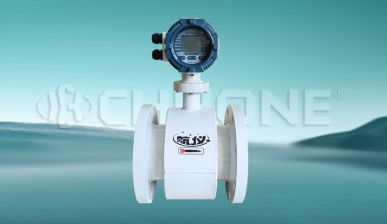
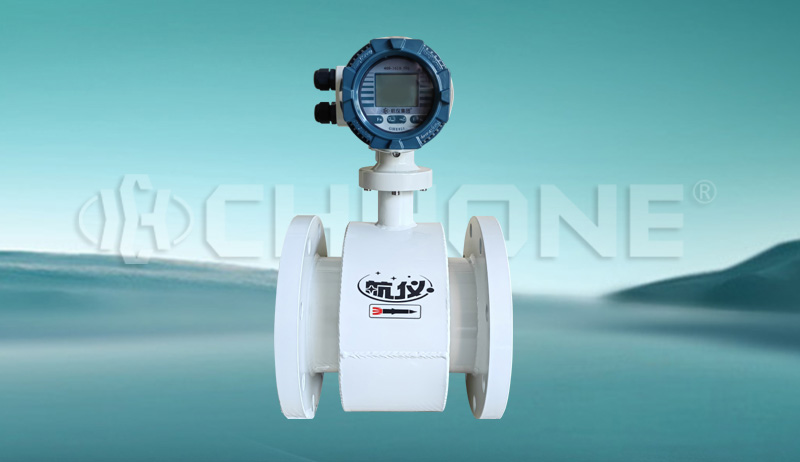
AnElectromagnetic Flowmeter(also known as a magnetic flowmeter or magmeter) is a device used to measure the flow rate of electrically conductive liquids. The instrument works by generating a magnetic field inside the flow tube and measuring the voltage produced when the liquid flows through this field.
The main components of an electromagnetic flowmeter typically include:
- Flow tube with insulating liner
- Electromagnetic coils
- Electrodes
- Signal transmitter
- Microprocessor control system
- Communication interface
When conductive fluid flows through the flow tube, it passes through a magnetic field generated by the electromagnetic coils. According toFaraday’s Law, the moving conductive liquid acts as a conductor cutting through the magnetic field, generating a small voltage signal.
The electrodes inside the flow tube detect this voltage. The transmitter then amplifies and converts the signal into a flow measurement value.
The basic measurement formula is:
Flow Velocity = Generated Voltage ÷ Magnetic Field Strength
The volumetric flow rate is calculated by multiplying the flow velocity by the cross-sectional area of the pipe.
Because the measurement principle depends on conductivity, electromagnetic flowmeters are suitable forconductive liquids with conductivity greater than approximately 5 μS/cm.
H2: Types of Electromagnetic Flowmeters
Electromagnetic flow measurement technology includes several specialized product types designed for different industrial applications.
H3: Standard Electromagnetic Flowmeter
The standardElectromagnetic Flowmeteris widely used for measuring conductive liquids in pipelines. It consists of a flow sensor installed in the pipeline and a transmitter that processes the measurement signal.
Standard electromagnetic flowmeters are commonly used in:
- Water supply systems
- Wastewater treatment plants
- Chemical processing industries
- Pulp and paper production
CHHONE electromagnetic flowmeters feature advanced signal processing technology and intelligent digital transmitters that provide high accuracy and stable performance.
H3: Sanitary Magnetic FlowMeter
TheSanitary Magnetic FlowMeteris specially designed for hygienic industries such as food processing, pharmaceuticals, and biotechnology.
Sanitary flowmeters are manufactured with polished stainless steel surfaces and hygienic connections such astri-clamp fittings. These designs prevent contamination and allow easy cleaning.
Sanitary magnetic flowmeters are widely used for measuring liquids such as:
- Milk
- Juice
- Beer
- Syrup
- Pharmaceutical liquids
CHHONE sanitary electromagnetic flowmeters comply with strict hygienic standards and provide reliable flow measurement for sensitive production environments.
H3: Insertion Electromagnetic Flowmeter
AnInsertion Electromagnetic Flowmeteris designed for installation in large pipelines where full-bore flowmeters may be expensive or difficult to install.
Instead of replacing the entire pipeline section, the insertion sensor is inserted into the pipe through a small opening.
This type of flowmeter offers several advantages:
- Lower installation cost
- Suitable for large-diameter pipelines
- Easy installation and maintenance
- Minimal disruption to pipeline operation
Insertion electromagnetic flowmeters are commonly used inmunicipal water systems, irrigation networks, and large industrial pipelines.
H3: Explosion-Proof Electromagnetic Flowmeter
In hazardous industrial environments where flammable gases or explosive vapors may be present, special safety measures are required.
AnExplosion-Proof Electromagnetic Flowmeteris designed to operate safely in these environments. These instruments feature:
- Intrinsically safe electronic circuits
- Explosion-proof enclosures
- Compliance with hazardous area safety standards
Explosion-proof electromagnetic flowmeters are widely used in industries such as:
- Oil and gas production
- Petrochemical processing
- Chemical manufacturing
- Fuel storage facilities
CHHONE provides explosion-proof flow measurement solutions designed for reliable operation in hazardous environments.
H2: Advantages of Electromagnetic Flowmeters
Electromagnetic flowmeters offer numerous advantages compared with traditional flow measurement technologies.
H3: High Measurement Accuracy
Electromagnetic flowmeters can achieve measurement accuracy within±0.5% of the measured value, making them suitable for precise industrial flow monitoring.
H3: No Moving Parts
Unlike turbine or mechanical flowmeters, electromagnetic flowmeters containno moving parts, which reduces wear and maintenance requirements.
H3: No Pressure Loss
Because the flow tube has no internal obstructions, electromagnetic flowmeters producealmost zero pressure loss, which improves energy efficiency in pipeline systems.
H3: Wide Range of Applications
Electromagnetic flowmeters can measure various conductive liquids, including:
- Water
- Wastewater
- Slurry
- Chemicals
- Food-grade liquids
H2: How to Choose an Electromagnetic Flowmeter
Selecting the right electromagnetic flowmeter requires careful consideration of several technical factors.
H3: Pipe Diameter
The flowmeter size should match the diameter of the pipeline. Full-bore electromagnetic flowmeters are available in a wide range of sizes to fit different pipelines.
H3: Liquid Conductivity
Since electromagnetic flowmeters require conductive fluids, the electrical conductivity of the liquid must meet the minimum requirement.
Typical minimum conductivity is5 μS/cm.
H3: Liner Material
The liner material inside the flow tube must be selected based on the characteristics of the measured liquid.
Common liner materials include:
- PTFE (excellent chemical resistance)
- Rubber (suitable for water applications)
- PFA (high temperature and corrosion resistance)
H3: Electrode Material
Electrode materials should also be selected according to the chemical properties of the fluid.
Common electrode materials include:
- Stainless steel
- Hastelloy
- Titanium
- Platinum
H3: Output and Communication Interface
Modern electromagnetic flowmeters support multiple communication interfaces for industrial automation systems.
Common outputs include:
- 4–20 mA analog signal
- RS485 communication
- Modbus protocol
- Pulse output
These interfaces allow easy integration with PLC and SCADA systems.
H2: How to Install and Use an Electromagnetic Flowmeter
Proper installation is essential to ensure accurate and stable flow measurement.
H3: Installation Guidelines
For best performance, the flowmeter should be installed according to the following guidelines:
- Install the flowmeter in a full pipe section.
- Avoid installation near strong electromagnetic interference sources.
- Ensure sufficient straight pipe length before and after the meter.
- Install grounding rings if required.
These measures help ensure stable measurement results.
H3: Calibration and Configuration
Modern electromagnetic flowmeters include digital configuration systems that allow easy setup.
Typical configuration steps include:
- Setting pipe diameter
- Configuring measurement units
- Setting output signals
- Adjusting flow range parameters
After configuration, the system provides continuous real-time flow monitoring.
H3: Maintenance Recommendations
Although electromagnetic flowmeters require minimal maintenance, periodic inspections are recommended.
Maintenance tasks include:
- Checking electrode cleanliness
- Inspecting electrical connections
- Verifying grounding conditions
- Monitoring signal stability
Regular maintenance ensures long-term measurement accuracy.
H2: Industrial Applications of Electromagnetic Flowmeters
Electromagnetic flowmeters are widely used in many industries.
H3: Water and Wastewater Treatment
Magnetic flowmeters are commonly used in water supply networks, sewage treatment plants, and wastewater discharge monitoring systems.
H3: Chemical Industry
Chemical plants use electromagnetic flowmeters to measure corrosive liquids, acids, and alkalis in production processes.
H3: Food and Beverage Industry
Sanitary magnetic flowmeters are used in hygienic production lines for measuring milk, beverages, syrups, and other food-grade liquids.
H3: Mining and Slurry Transport
Electromagnetic flowmeters are also suitable for measuring slurry flows in mining and mineral processing industries.
H2: Why Choose CHHONE Electromagnetic Flowmeters
When selecting anElectromagnetic Flowmeter manufacturer, product reliability, engineering capability, and manufacturing quality are important factors.
CHHONE is a professional manufacturer specializing in advanced flow measurement instruments. The company provides a comprehensive range of electromagnetic flow measurement products, including:
- Electromagnetic Flowmeters
- Sanitary Magnetic FlowMeters
- Insertion Electromagnetic Flowmeters
- Explosion-Proof Electromagnetic Flowmeters
CHHONE flow measurement instruments are designed with advanced digital signal processing technology and durable industrial materials.
Key advantages of CHHONE products include:
- High measurement accuracy
- Strong anti-interference capability
- Long service life
- Multiple communication interfaces
- Customized solutions for various industries
With strong R&D capabilities and strict manufacturing standards, CHHONE continues to provide reliable flow measurement solutions for customers around the world.
More information about CHHONE products can be found at:
H2: FAQ – Electromagnetic Flowmeter
What liquids can be measured by an electromagnetic flowmeter?
Electromagnetic flowmeters can measure conductive liquids such as water, wastewater, chemicals, acids, alkalis, and food-grade liquids.
Can electromagnetic flowmeters measure non-conductive liquids?
No. Magnetic flowmeters require conductive fluids to generate a measurable voltage signal.
What is the typical accuracy of an electromagnetic flowmeter?
Most electromagnetic flowmeters provide accuracy within±0.5% of the measured value.
How long does an electromagnetic flowmeter last?
With proper installation and maintenance, electromagnetic flowmeters can operate reliably formore than 10 years.