MLSS Measurement Guide: Understanding MLSS, MLSS Meter Selection, and Industrial Applications
Introduction to MLSS Measurement in Wastewater Treatment
In modern water treatment systems, monitoring suspended solids is essential for maintaining efficient biological processes. One of the most important parameters used in wastewater treatment plants isMLSS (Mixed Liquor Suspended Solids). MLSS refers to the concentration of suspended solids present in the aeration tank during the activated sludge process, and it typically consists of microorganisms, organic matter, and inorganic particles that help degrade pollutants in wastewater.
MLSS concentration is commonly expressed inmg/L or g/L, and maintaining the correct MLSS level ensures the right balance between organic pollutants and microorganisms, often referred to as theFood-to-Microorganism (F/M) ratio. Proper control of this ratio allows bacteria to efficiently break down organic matter and maintain stable treatment performance.
As industrial and municipal wastewater treatment facilities continue to modernize, accurate and real-time monitoring is becoming increasingly important. This is where advancedMLSS MeterandIndustrial MLSS Analyzertechnologies play a vital role. Companies likeCHHONEprovide high-performance sensors and analyzers designed forhigh accuracy MLSS measurement, enabling operators to maintain optimal process control while reducing operational costs.
What is MLSS?
Definition of MLSS
MLSS stands forMixed Liquor Suspended Solids, which represents the total concentration of suspended solids in the aeration tank of a biological wastewater treatment system. These solids mainly include:
- Active microorganisms (bacteria, protozoa, fungi)
- Organic suspended particles
- Inorganic substances
- Biological flocs formed during treatment
These microorganisms form the biological engine of theactivated sludge process, converting organic contaminants into stable byproducts such as carbon dioxide, water, and biomass.
Importance of MLSS Monitoring
Maintaining a stable MLSS concentration is essential for wastewater treatment efficiency. If the MLSS level is too low, there will not be enough microorganisms to degrade pollutants effectively. If the MLSS level becomes too high, it can lead to problems such as sludge bulking, poor oxygen transfer, and reduced settling efficiency.
Typical MLSS ranges include:
- Conventional activated sludge systems:2,000–5,000 mg/L
- Membrane bioreactors (MBR):8,000–15,000 mg/L
Maintaining these ranges helps ensure efficient treatment performance and stable system operation.
Because of its critical role, MLSS is widely monitored in:
- Municipal wastewater treatment plants
- Industrial wastewater treatment facilities
- Food and beverage processing plants
- Chemical manufacturing plants
- Pharmaceutical wastewater systems
To achieve continuous monitoring, treatment plants increasingly rely onIndustrial MLSS Analyzersrather than manual laboratory testing.
What is an MLSS Meter?
MLSS Meter Working Principle
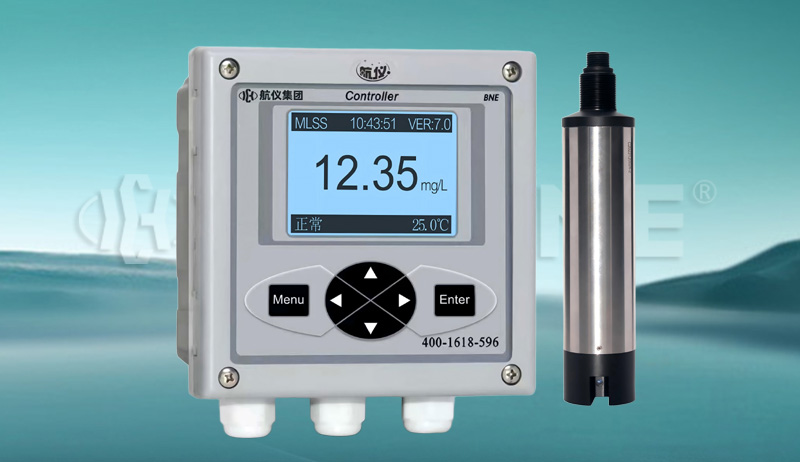
AnMLSS Meteris an instrument designed to measure the concentration of suspended solids in wastewater or sludge. Most modern MLSS analyzers useoptical measurement technologies, such as:
- Infrared light scattering method
- Optical transmission method
- Dual-beam optical sensors
When light enters a water sample containing suspended solids, particles scatter or absorb the light. By measuring the intensity of scattered or transmitted light, the sensor calculates the MLSS concentration.
This technology allows forreal-time monitoringof sludge concentration, providing accurate and continuous data for process control.
Types of MLSS Measurement Instruments
There are several types of MLSS monitoring instruments available:
Portable MLSS Meter
Portable meters are handheld devices used for field measurements and laboratory verification. These instruments are ideal for quick testing in aeration tanks or sludge basins.
Online MLSS Analyzer
Online analyzers are permanently installed sensors that continuously monitor MLSS levels in treatment tanks. These systems transmit data to control systems for automated process optimization.
Industrial MLSS Analyzer
Industrial-grade MLSS analyzers are designed for continuous operation in harsh environments such as chemical plants, refineries, and large wastewater facilities.
CHHONE offers advancedIndustrial MLSS Analyzer solutionsdesigned for reliable performance, durable construction, and precise measurement even in challenging industrial conditions.
How to Choose the Right MLSS Meter
Selecting the rightMLSS Meterdepends on several technical and operational factors. Choosing a high-quality analyzer ensures accurate readings, long-term reliability, and reduced maintenance.
Measurement Range
Different wastewater systems require different MLSS measurement ranges. For example:
- Standard wastewater plants: up to5,000 mg/L
- High-concentration sludge systems: up to20,000 mg/L
Many industrial MLSS analyzers support wide measurement ranges to accommodate different treatment processes.
Accuracy and Stability
High accuracy is critical for process control. Modern analyzers typically achieve±1–2% measurement accuracy, ensuring reliable data for plant operators.
High accuracy MLSS measurement also requires:
- Stable optical sensors
- Automatic calibration capability
- Advanced signal processing
CHHONE MLSS analyzers are engineered with precision optical sensors and intelligent algorithms to deliverhigh accuracy MLSS measurement in real-time applications.
Sensor Durability
Wastewater environments can be extremely harsh, with high levels of corrosion, biofouling, and suspended particles. A reliable MLSS analyzer must feature:
- Corrosion-resistant materials
- Anti-fouling sensor design
- Automatic cleaning systems
CHHONE instruments are built with robust materials and advanced protective structures to ensure long service life in demanding industrial environments.
Maintenance Requirements
Low maintenance is an important factor in large treatment facilities. Advanced MLSS analyzers include features such as:
- Self-cleaning sensors
- Automatic calibration
- Smart diagnostics
These functions help reduce manual maintenance and improve operational efficiency.
How to Use an MLSS Analyzer
Installation Guidelines
Proper installation is essential for accurate MLSS measurement. The sensor should be installed in locations where wastewater is well mixed and representative of the process conditions.
Common installation points include:
- Aeration tanks
- Return activated sludge pipelines
- Secondary clarifier outlets
- Sludge recirculation systems
Correct sensor placement ensures that measurement results reflect the actual sludge concentration.
Calibration Procedures
Even high-precision MLSS meters require periodic calibration to maintain measurement accuracy. Calibration is typically performed by comparing analyzer readings with laboratory MLSS measurements.
Calibration steps usually include:
- Collecting representative wastewater samples
- Performing laboratory suspended solids analysis
- Adjusting analyzer calibration parameters
- Verifying measurement accuracy
CHHONE MLSS analyzers support convenient calibration procedures that allow operators to maintain optimal measurement performance.
Data Monitoring and Process Control
MLSS data plays a critical role in wastewater treatment process control. Real-time monitoring allows operators to:
- Adjust sludge return rates
- Control aeration intensity
- Maintain proper sludge age
- Optimize biological treatment efficiency
With modern digital communication protocols, CHHONE MLSS analyzers can integrate seamlessly withSCADA and industrial automation systems, enabling intelligent plant management.
Applications of Industrial MLSS Analyzers
Municipal Wastewater Treatment Plants
Municipal plants rely heavily on MLSS monitoring to maintain stable biological treatment. Continuous MLSS measurement helps operators maintain optimal sludge concentrations and prevent treatment failures.
Industrial Wastewater Treatment
Industrial wastewater often contains higher pollutant loads and complex chemical compositions. Accurate MLSS monitoring ensures that treatment systems maintain sufficient microbial activity.
Industries that benefit from MLSS monitoring include:
- Petrochemical plants
- Pharmaceutical manufacturing
- Food processing facilities
- Textile industries
- Pulp and paper mills
Environmental Monitoring
Environmental agencies and research institutions also use MLSS analyzers to study sludge characteristics and treatment efficiency.
Advantages of CHHONE MLSS Measurement Solutions
As a professional manufacturer of water quality monitoring instruments,CHHONEprovides advanced solutions for MLSS monitoring in industrial and environmental applications.
High Accuracy MLSS Measurement
CHHONE analyzers use advanced optical sensing technology to achieve highly reliable and stable MLSS measurements.
Industrial-Grade Sensor Design
CHHONE sensors are designed for harsh environments, featuring:
- Corrosion-resistant materials
- Anti-interference optical systems
- Long-life sensors
These features ensure reliable performance even in demanding industrial wastewater conditions.
Intelligent Monitoring Systems
CHHONE MLSS analyzers support modern digital communication technologies, allowing integration with plant automation systems for intelligent monitoring and remote management.
Wide Product Range
In addition toMLSS MeterandIndustrial MLSS Analyzer, CHHONE also manufactures a wide range of water quality monitoring instruments, including:
- Dissolved Oxygen Meter
- Turbidity Meter
- pH Analyzer
- COD Analyzer
- Multi-parameter water quality sensors
These instruments provide comprehensive monitoring solutions for wastewater treatment plants and industrial water systems.
Future Trends in MLSS Monitoring Technology
With the advancement of digital technology and smart water management systems, MLSS monitoring is becoming increasingly intelligent.
Future trends include:
- Smart sensors with AI-based calibration
- Remote monitoring through IoT platforms
- Automated sludge control systems
- Integrated water quality monitoring networks
CHHONE continues to invest in research and development to deliver innovativeMLSS measurement solutionsthat meet the evolving needs of modern water treatment industries.
Conclusion
MLSS monitoring is a critical component of wastewater treatment management. Accurate measurement ofMixed Liquor Suspended Solidsensures optimal biological treatment efficiency, stable process operation, and compliance with environmental standards.
By selecting a reliableMLSS MeterorIndustrial MLSS Analyzer, operators can achieve precise sludge monitoring and improve overall treatment performance.
With advanced sensing technology, industrial-grade durability, and intelligent monitoring capabilities,CHHONEprovides high-quality instruments forhigh accuracy MLSS measurementin municipal and industrial wastewater applications.
As water treatment systems continue to evolve, CHHONE remains committed to delivering innovative monitoring solutions that help industries achieve sustainable and efficient water management.