Turbidity Meter: A Complete Guide to High Accuracy Turbidity Measurement and Professional Manufacturers
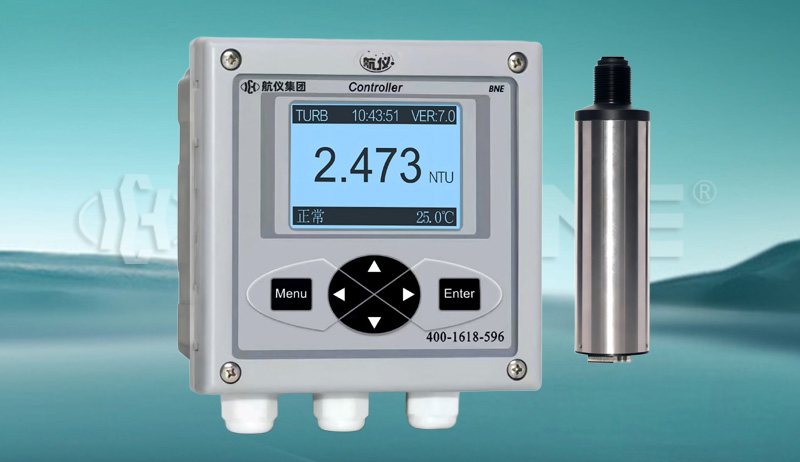
Water quality monitoring plays a crucial role in environmental protection, industrial production, and municipal water management. Among the many parameters used to evaluate water clarity and contamination, turbidity is one of the most important indicators. ATurbidity Meteris the key instrument used to measure suspended particles in water, helping industries maintain compliance with environmental regulations and process standards.
With increasing demand for precise monitoring equipment, choosing a reliableTurbidity Meter Supplierand aHigh Accuracy Turbidity Meter Manufacturerhas become essential for laboratories, wastewater plants, and industrial facilities. Companies likeCHHONEfocus on developing advanced water quality analyzers that deliver stable performance, high precision, and long service life.
This article will explore turbidity meters from multiple perspectives—including what they are, how they work, how to choose the right model, and how to use them effectively.
What is a Turbidity Meter?
ATurbidity Meteris an analytical instrument used to measure the cloudiness or haziness of liquids caused by suspended particles such as silt, microorganisms, organic matter, and industrial contaminants. Turbidity is typically expressed inNTU (Nephelometric Turbidity Units), which represents the intensity of light scattered by particles in a water sample.
Most modern turbidity meters use thenephelometric measurement principle, where a light source shines through a water sample and detectors measure the scattered light at a specific angle. The greater the number of particles in the water, the more light is scattered, resulting in a higher turbidity value.
In practical applications, turbidity measurement is widely used in:
- Drinking water treatment plants
- Industrial wastewater monitoring
- Environmental water quality analysis
- Aquaculture and fisheries
- Pharmaceutical and food production processes
- Laboratory research and quality control
For industries that require continuous monitoring,online turbidity analyzerscan be installed directly in pipelines or tanks, providing real-time turbidity readings and alarm signals when limits are exceeded.
As a professional manufacturer,CHHONEdevelops advanced turbidity meters designed for industrial environments, offering stable optical systems, high-sensitivity detectors, and long-term measurement reliability.
Working Principle of a Turbidity Meter
The fundamental measurement method used in turbidity meters is based onlight scattering technology. When a beam of light passes through a liquid sample, suspended particles scatter the light in different directions.
The turbidity meter detects this scattered light using photodetectors positioned at specific angles, usually90 degreesfrom the light source. The intensity of the scattered light is directly proportional to the turbidity level of the sample.
Key components of a turbidity meter include:
- Light Source
Usually an infrared LED or tungsten lamp that provides a stable light beam. - Sample Chamber
The location where the water sample is placed or flows through. - Photodetector
Detects scattered light caused by suspended particles. - Signal Processing Unit
Converts optical signals into digital turbidity values displayed on the screen.
High-quality turbidity meters often include features such as:
- Multi-point calibration
- Automatic range selection
- Data logging and communication outputs
- Temperature compensation
- Anti-interference optical design
Some high-end turbidity meters can measure turbidity across a wide range from0 to 2000 NTU, with resolutions as low as0.01 NTU, enabling accurate monitoring even in very clean drinking water systems.
Types of Turbidity Meters
Different industries require different turbidity measurement solutions. Generally, turbidity meters can be divided into three main types.
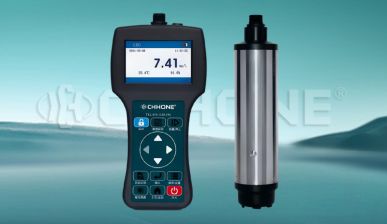
Portable Turbidity Meter
Portable turbidity meters are handheld instruments designed for field measurements. They are commonly used by environmental inspectors, water treatment technicians, and laboratory researchers.
Advantages include:
- Lightweight and easy to carry
- Battery-powered operation
- Fast measurement results
- Suitable for on-site testing
Portable meters are widely used for testing river water, lakes, wastewater outlets, and drinking water samples.
Laboratory Turbidity Meter
Laboratory turbidity meters are bench-top instruments designed for high-precision analysis. They are commonly used in:
- Research laboratories
- Water treatment laboratories
- Quality control departments
These meters often offer higher accuracy, advanced calibration features, and data management functions.
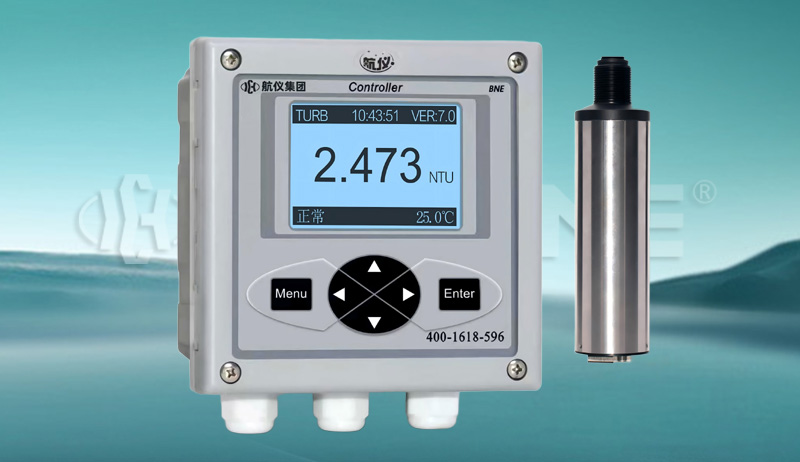
Online Turbidity Analyzer
Online turbidity analyzers are installed directly in pipelines or water systems for continuous monitoring.
Key advantages include:
- Real-time measurement
- Automatic cleaning systems
- Alarm outputs for high turbidity levels
- Integration with industrial control systems
CHHONE provides industrial-grade online turbidity analyzers that are widely used in wastewater treatment plants and industrial process monitoring systems.
How to Choose the Right Turbidity Meter
Selecting the right turbidity meter depends on several factors related to your application environment and measurement requirements.
1. Measurement Range
Different applications require different turbidity ranges.
Examples:
- Drinking water: 0–5 NTU
- Surface water: 1–100 NTU
- Wastewater: up to 1000 NTU
Choosing a meter with the appropriate measurement range ensures higher accuracy and stability.
2. Accuracy and Resolution
High-precision measurements are especially important in drinking water treatment plants and laboratories.
Look for meters that provide:
- Resolution of 0.01 NTU or better
- Accuracy within ±2% of reading
These specifications ensure reliable turbidity monitoring.
3. Calibration Method
A good turbidity meter should supportmulti-point calibration, allowing users to calibrate the instrument using standard turbidity solutions.
Common calibration standards include:
- 0.02 NTU
- 20 NTU
- 100 NTU
- 800 NTU
Multi-point calibration ensures long-term measurement accuracy.
4. Durability and Environmental Protection
For industrial environments, the meter should have:
- Waterproof and dustproof housing (IP65 or IP67)
- Stable optical system
- Anti-fouling design
CHHONE turbidity meters are designed with industrial-grade components, ensuring stable operation even in harsh wastewater environments.
5. Communication and Data Output
Modern turbidity meters often support:
- 4–20 mA analog output
- RS485 communication
- Modbus protocol
- Data logging and remote monitoring
These features allow integration with industrial automation systems.
How to Use a Turbidity Meter
Using a turbidity meter correctly ensures accurate and repeatable measurements.
Step 1: Prepare the Sample
Collect the water sample in a clean sample vial. Avoid bubbles or contamination that may affect measurement results.
Step 2: Calibrate the Instrument
Before measurement, calibrate the turbidity meter using standard solutions to ensure accuracy.
Step 3: Insert the Sample
Place the sample vial into the measurement chamber and close the lid to block external light interference.
Step 4: Start Measurement
Press the measurement button and wait for the reading to stabilize. Most modern turbidity meters provide results within a few seconds.
Step 5: Record and Analyze Data
Record the turbidity value and compare it with water quality standards or process control limits.
For online turbidity analyzers, the instrument continuously monitors turbidity and automatically sends signals to control systems when turbidity exceeds preset thresholds.
Applications of Turbidity Meters
Turbidity meters are widely used across many industries where water quality monitoring is critical.
Municipal Water Treatment
Turbidity monitoring ensures drinking water meets safety standards and filtration systems operate efficiently.
Wastewater Treatment
In wastewater plants, turbidity meters help evaluate treatment efficiency and ensure discharged water meets environmental regulations.
Environmental Monitoring
Government agencies use turbidity meters to monitor rivers, lakes, and coastal waters.
Industrial Process Control
Industries such as food processing, pharmaceuticals, chemicals, and power generation use turbidity meters to monitor process water quality.
Aquaculture
Fish farms monitor turbidity to maintain optimal water conditions for aquatic life.
CHHONE: A Professional High Accuracy Turbidity Meter Manufacturer
As a professionalHigh Accuracy Turbidity Meter Manufacturer,CHHONEfocuses on developing reliable water quality analysis instruments for global customers.
The company integrates advanced optical sensing technology, precision electronic design, and intelligent signal processing to provide high-performance turbidity measurement solutions.
Key advantages of CHHONE turbidity meters include:
- High-sensitivity optical detection systems
- Wide measurement range for industrial applications
- Stable and long-term measurement performance
- Easy calibration and maintenance
- Multiple output signals for industrial control systems
CHHONE products are widely used in municipal water treatment plants, industrial wastewater systems, environmental monitoring stations, and laboratory research facilities.
With strong R&D capabilities, strict manufacturing standards, and global distribution experience, CHHONE continues to provide reliable turbidity measurement solutions to customers worldwide.
Conclusion
ATurbidity Meteris an essential instrument for monitoring water clarity and detecting suspended particles in liquids. From drinking water treatment to industrial wastewater monitoring, turbidity measurement plays a vital role in ensuring water quality and environmental compliance.
When selecting a turbidity meter, factors such as measurement range, accuracy, calibration capability, and durability must be carefully considered. Choosing a trustedTurbidity Meter SupplierorHigh Accuracy Turbidity Meter Manufacturerensures reliable measurement performance and long-term operational stability.
With advanced technology and professional manufacturing experience,CHHONEprovides high-quality turbidity meters designed to meet the demanding requirements of modern water quality monitoring.